Meet Carrboro, NC's New Poet Laureate, Dr. Amanda Bennett
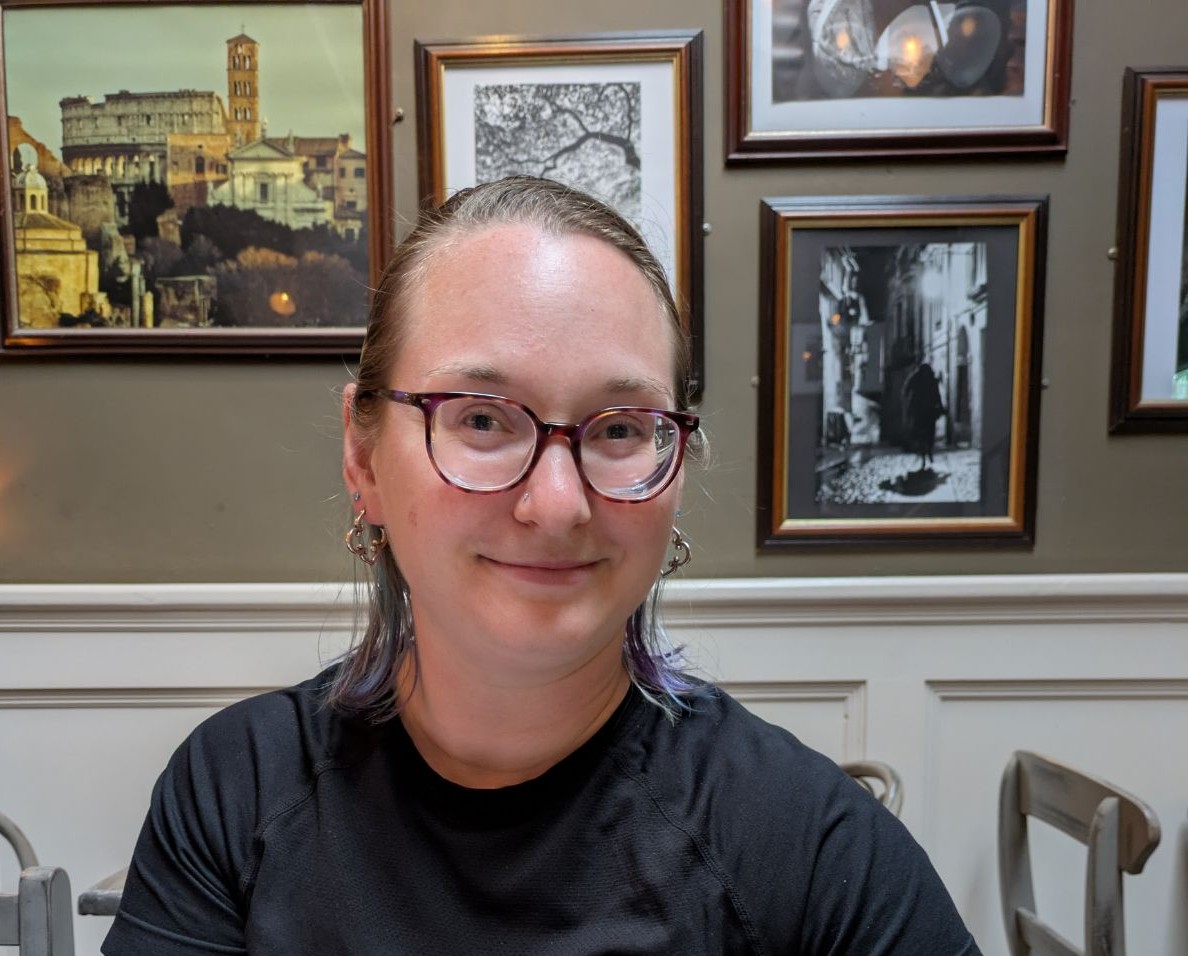
Dr. Amanda Bennett, the newly appointed Poet Laureate of Carrboro, NC, took the time to tell us about her work creating community with poetry. Her poetry centers themes of queer Black feminism and spirituality. We at Ink & Oak are honored she shared her insight with us and are excited to see how she combines poetry and community during her tenure.

BiographyDr. Amanda Bennett is a Postdoctoral Fellow at UNC Chapel Hill’s Arts & Humanities Grants Studio, with a focus in Grant Operations Management and Creative Engagement. She was appointed as the Poet Laureate for Carrboro, NC in 2025. Her work can be found in numerous journals and her debut chapbook, Working the Roots from Querencia Press. Follow Her Online:
|
Interview
Q1: Congratulations on your recent publication of Working the Roots with Querencia Press. What can readers expect from this work?
Readers can expect to go on a journey that moves between my internal, emotional, and sensual terrain and outward into the broader landscape of the South. The book explores the relationship between physical embodiment and the material and spiritual forces that shape how we understand ourselves and relate to one another.
In Working the Roots, I’m practicing an early version of what I now call confessionalist rootwork—turning toward the autobiographical as a way of developing a creative voice that is both emotionally true and oriented toward justice. The poems ask what it means to reclaim the self from systems of violence like patriarchy, white supremacy, capitalism, and heteronormativity, and how that reclamation can become something we pass on to others. Ultimately, the book is about liberation as a lived, relational practice—one that begins in the body and moves outward into community.
Q2: Your work academically and professionally revolves around queer Black feminism. Which foremothers do you credit with inspiring your creative practice?
Within my genealogy of queer Black feminist foremothers, I draw from multiple traditions across form, genre, and time. I approach Black feminism as a kind of bricolage, which reflects a core belief in my work: that Black women are allowed to be multiple, and that our multiplicity is not a flaw but a source of strength—one rooted in the inherently intersectional nature of our lived experiences.
I often think back to my dissertation, where I was deeply inspired by Toni Morrison, whom I understand as a griot of Black American literature—someone who held history, memory, and spiritual knowledge in narrative form. I’m also inspired by Hortense Spillers, whom I see as a conjure woman of the Black interior, using psychoanalysis and spiritual rhetoric to name what has been repressed or rendered unspeakable.
Alice Walker is another crucial figure for me. I think of her as a medium whose life’s work was about reconnecting modern Black women to their own foremothers—most famously through her reclamation of Zora Neale Hurston from historical erasure. And I’m deeply influenced by Ntozake Shange, whose dramatic work teaches us the importance of ceremony and ritual within Black queer feminist life.
Together, these foremothers remind me that the work is not just about reading and writing in isolation. It’s about gathering with intention, love, and care—creating spaces for collective catharsis, recognition, and understanding. That sense of shared ritual is foundational to both my creative practice and my approach to community.
Q3: You have previously stated that poetry resides in community and that it sustains us. Could you elaborate more on what this means to you and how you hope to further embed poetry into our local community as Carrboro’s newest poet laureate?
For me, poetry exists as a kind of third space—something that lives between the interior and the exterior. It’s a space where what is often left unsaid, overlooked, or unnamed can surface in ways that deepen awareness and connection. Poetry gives language to feeling, memory, and intuition, and in doing so, it allows us to understand ourselves and one another more fully.
Because of this, I don’t see poetry as a solitary or purely literary practice. I see it as relational and sustaining. Poetry holds space for emotional truth, for contradiction, and for possibility, and that makes it a vital communal resource. When we engage poetry together, we’re not just consuming art—we’re practicing attention, care, and imagination.
This belief shapes how I move through the world as a poet. I’m interested in how poetry helps us notice what has been ignored, honor interior lives, and imagine futures that are more humane and habitable than the present. In that sense, poetry sustains us not by offering easy answers, but by teaching us how to listen—to ourselves and to one another—with greater depth and generosity.
Q4: What are your goals in your tenure as Carrboro’s poet laureate? Your work places a high value on community and inclusivity. How will your vision shape the projects you are planning?
My goals as Carrboro’s Poet Laureate are rooted in access, care, and continuity. I’m interested in building literary spaces that feel welcoming and durable—spaces where people don’t just encounter poetry once, but feel invited into an ongoing relationship with it.
A core part of my vision is partnership. I’m honored to collaborate with groups like the Poetic Justice League at Carrboro High School and the Redbud Writing Project, and I’m deeply invested in bridging the broader Carrboro community with UNC–Chapel Hill so that creative and cultural resources circulate more freely between those worlds. I see the role of poet laureate as someone who builds connective tissue—between institutions and neighborhoods, between generations, and between people who might not otherwise find themselves in the same room.
Programmatically, this looks like write-ins and gatherings for young writers of color—especially young women and femmes of color—held in accessible, welcoming spaces such as porches, museums, and community hubs. It also includes a strong commitment to bringing poetry to those who have been most marginalized or forgotten, including through work in prisons, where poetry can be a powerful tool for storytelling, dignity, and self-recognition.
I’m equally passionate about poetry as a space for consciousness-raising and collective reflection, particularly for women, femmes, AFAB people, nonbinary and trans folks. Creating poetry readings and gatherings around Women’s History Month is one way I hope to honor that lineage. Intergenerational community is central to this vision as well—I want to create spaces where children as young as five can write and listen alongside elders in their seventies, sharing stories across age and experience.
Ultimately, my goal is for Carrboro to feel like a place where poetry lives in everyday life—on porches, in classrooms, in community spaces—and where people feel seen, invited, and sustained by language.
Q5: What can you tell our readers about your road to becoming a poet? What advice would you share with others who might also wish to become poet laureates?
I want people to know that there are many paths to becoming a poet, and that all of them are valid. I don’t have an MFA, and I only took a few creative writing classes in college. My relationship to poetry has been largely self-taught and shaped through community—especially through poetry spaces in Durham where writing was something practiced together, not credentialed or gatekept.
In many ways, my path reflects how Black women writers have always come into poetry. I think about traditions like the Sisterhood that held figures such as Toni Morrison, Ntozake Shange, and Alice Walker—women who didn’t just write together, but shared resources, cooked meals, supported one another’s health and survival, and built lives alongside their art. I also think about Audre Lorde and her work with Kitchen Table: Women of Color Press, which emerged out of necessity when existing institutions refused to publish Black feminist voices.
These histories remind us that poetry has never only lived in classrooms or elite programs. It has lived in kitchens, living rooms, workshops, collectives, and friendships. The Black feminist lineage of becoming a poet is relational, collaborative, and sustainable because it is rooted in care and shared commitment rather than the myth of the solitary genius.
My advice to anyone who wants to become a poet is this: don’t wait for permission. Find your people. Write together. Read together. Build community. If you have a community, then you are a poet.
Q6: What events do you have planned for 2026? Where can our readers support your efforts or attend a performance?
2026 is shaping up to be a year of both public-facing performances and longer-term community-building. As Carrboro’s Poet Laureate, I share original poems regularly at Carrboro Town Council meetings, which has been a meaningful way to bring poetry into the civic life of the town. I’m also responsible for co-planning the West End Poetry Festival, which I see as an opportunity to celebrate local voices and deepen Carrboro’s literary culture.
Beyond Carrboro, I’ll be participating in a number of public events throughout the year. I have a Valentine’s season reading with Bull City Press, and I’ll also be featured in a downtown Durham reading series at Mettlesome Theater on August 8. This monthly series pairs short literary readings with live improv comedy—comedians listen closely to the work and then create something new inspired by its images, language, and emotional texture. The result is a collaborative, playful evening that honors the writing while inviting surprise and creative exchange.
I’ll also be facilitating a public conversation on Southern resilience at the Carrboro Film Festival on March 1. Alongside these events, I’m developing longer-term projects, including a proposed Black Girl Dreaming cohort focused on creativity, care, and collective imagination, which is currently in formation.
The best way for readers to support my work is by attending events when they can, supporting local arts organizations, and following along as projects unfold. I also encourage folks to subscribe to the West End Poetry newsletter as a way to stay connected to upcoming readings, festivals, and community poetry events in Carrboro and beyond. I see my role not just as offering performances, but as cultivating spaces where people can gather, listen, and imagine together.
Q7: Multiple reviews mention your poem “Black is a Place We Carry.” This piece has powerfully resonated with many readers. What can you tell us about the poem and how you came to write it? Why does this particular piece stand out to readers?
I think people are drawn to “Black Is a Place We Carry” because it shows how our relationship to the broader world is often mediated through our most intimate relationships. The poem insists that sincerity, sentimentality, and emotional honesty are not corny or naïve, but essential to the fabric of civic and social life.
I wrote the poem after spending a day with someone I cared for deeply while we were together at Pride in Raleigh. I was holding onto that feeling of belonging—of being held on multiple levels at once, both personally and collectively. The poem reflects a belief in relational abundance: the idea that when we open ourselves to love, our sense of home and possibility expands.
I’m especially interested in the political implications of tenderness. I’ve seen how tenderness can show up in public life—for example, after I read my poem “Laureate of Awe” at a Carrboro Town Council meeting and witnessed a moment of genuine care and embrace between community members and civic leaders. Moments like that remind me that justice doesn’t have to be modeled through domination, distance, or violence. It can be modeled through attention, care, and shared humanity.
The poem ends with the speaker wondering how much of their face they will carry with them through life, and choosing to carry only enough to know that they are home. For me, that gesture reflects an understanding of love as transformative rather than static. Our capacity to transform society through love begins with our willingness to let love transform our individual lives—through how we give it, how we receive it, and how we allow it to shape the ways we show up for one another.
Q8: In your recent Instagram post about your time with the Carrboro High School Poetic Justice League’s showcase you wrote, “Care is the condition for poetry, and poetry is how we imagine habitable futures.” What can you tell our readers about interacting with these young poets and the future you imagine for them?
It’s always a joy to work with young poets like those in the Poetic Justice League. Watching them take the stage, speak their truths, and treat one another with gentleness reminds me that integrity is not only possible, but actively practiced by young people. It’s also something many of us lose along the way as we compromise ourselves through work, relationships, and the pursuit of wealth or security.
Working with young people reminds me that I’m accountable to the future. The choices I make now—how I show up, what I value, what I protect—aren’t only about my individual desires. They’re about laying a foundation for those who come after me to live in a more habitable world. In that sense, integrity isn’t an abstract concept; it’s a building block. It’s part of the infrastructure of a just future.
For these young poets, I imagine a future where their creativity is structurally supported—where they’re not writing in isolation or in a vacuum, but held by communities of peers and elders who are committed to protecting and uplifting the most vulnerable voices. I believe we safeguard young people not just through encouragement, but by living in alignment with our own values. Care, in this way, becomes both a practice and a promise.
Q9: Through your work at define&empower, you have led workshops, taught Black Feminist Summer School, and much more. What has been your favorite experience connecting others in these meaningful spaces?
My favorite part of developing programs like Black Feminist Summer School is witnessing intimacy being cultivated in real time through the act of dreaming together. So often in our lives, we exist in silos—hardened behind boundaries of gender, race, sexuality, and class—and we lack the language, space, and tools to connect with one another beyond surface-level understanding.
Creating a container where people can play, imagine, and rediscover not only themselves but also the pleasure of friendship feels deeply important to me. In these spaces, intimacy isn’t incidental—it’s intentional. People begin to see one another more fully, and in doing so, they remember what it feels like to be in genuine relationship.
I understand play, intimacy, and friendship not just as personal experiences, but as political practices. They are processes through which we raise our consciousness, deepen our awareness of one another’s lives, and learn how to act with greater care, ethics, and accountability. These are the moments when connection becomes transformative—when community stops being an idea and starts becoming a lived practice.
Q10: Your work is described as centering on the spiritual, sacred elements of the every day. Where do you turn for hope and solace when life feels heavy? And is there wisdom from your writing practice you can share with any readers who might be navigating complex emotions?
When life feels heavy, I turn toward dreaming, hope, love, and community. I think one of the great tragedies of our political moment is the way we’re constantly inundated with worst-case scenarios—through the 24-hour news cycle, social media, and doom scrolling. Much of this is intentionally designed to dysregulate us, disempower us, and keep us trapped in cycles of anxiety rather than building our capacity to imagine otherwise.
When I start to feel depleted or hopeless, I know it’s time to step away from those inputs. I turn instead toward real spaces where people are writing, thinking, and dreaming together, and back toward my own creative practice. Writing gives me a way to ask: if what I’m seeing around me feels untenable, what would it look like to imagine something different—something that actually addresses the conditions I’m living inside? Through that act of visioning, I feel myself become more agentic. That sense of agency becomes a source of solace, because it reminds me that I’m not doomed—I have the capacity to shape my life and my world through imagination.
When it comes to navigating complex emotions, I often think about something Nikky Finney once said—that when she writes, she goes to the bone. That idea has stayed with me. I believe so much prolonged suffering comes from our unwillingness or inability to face the hardest truths. Writing asks us to sit with discomfort, to be honest with ourselves, and to stay present even when it’s difficult.
For me, the practice of writing—and then sharing that work with others—has been deeply cathartic. It transforms pain into clarity and isolation into connection. My advice to readers navigating complex emotions is to trust that honesty is a form of care. When we allow ourselves to go to the bone, we create the possibility for real healing, both individually and collectively.
The Bottom Line
Thank you to Dr. Amanda Bennett for sharing her time and thoughtful responses with us. If her work or story has inspired you to write the next poetic masterpiece on spirituality, queer Black feminism, the vitality of tenderness and community in the face of uncertainty, or something else entirely, we would love to read it. Submit your work to Ink & Oak today for a chance to be published in our February edition!


Comments